All We Did Was Try to Live
Investigative Report: Jubrakanews
Behind the doors of Sudanese prisons, dozens of women remain detained after being convicted or put on trial on charges of collaborating with the Rapid Support Forces (RSF) during the war that began on 15 April 2023. The charges are based on Articles 50 and 51 of Sudan's Criminal Act of 1991.
This law was enacted under the Salvation Government, specifically as part of its legislative project to reshape the system of politically and security-related offences. The penalties under these articles range from the death penalty to lengthy prison sentences.
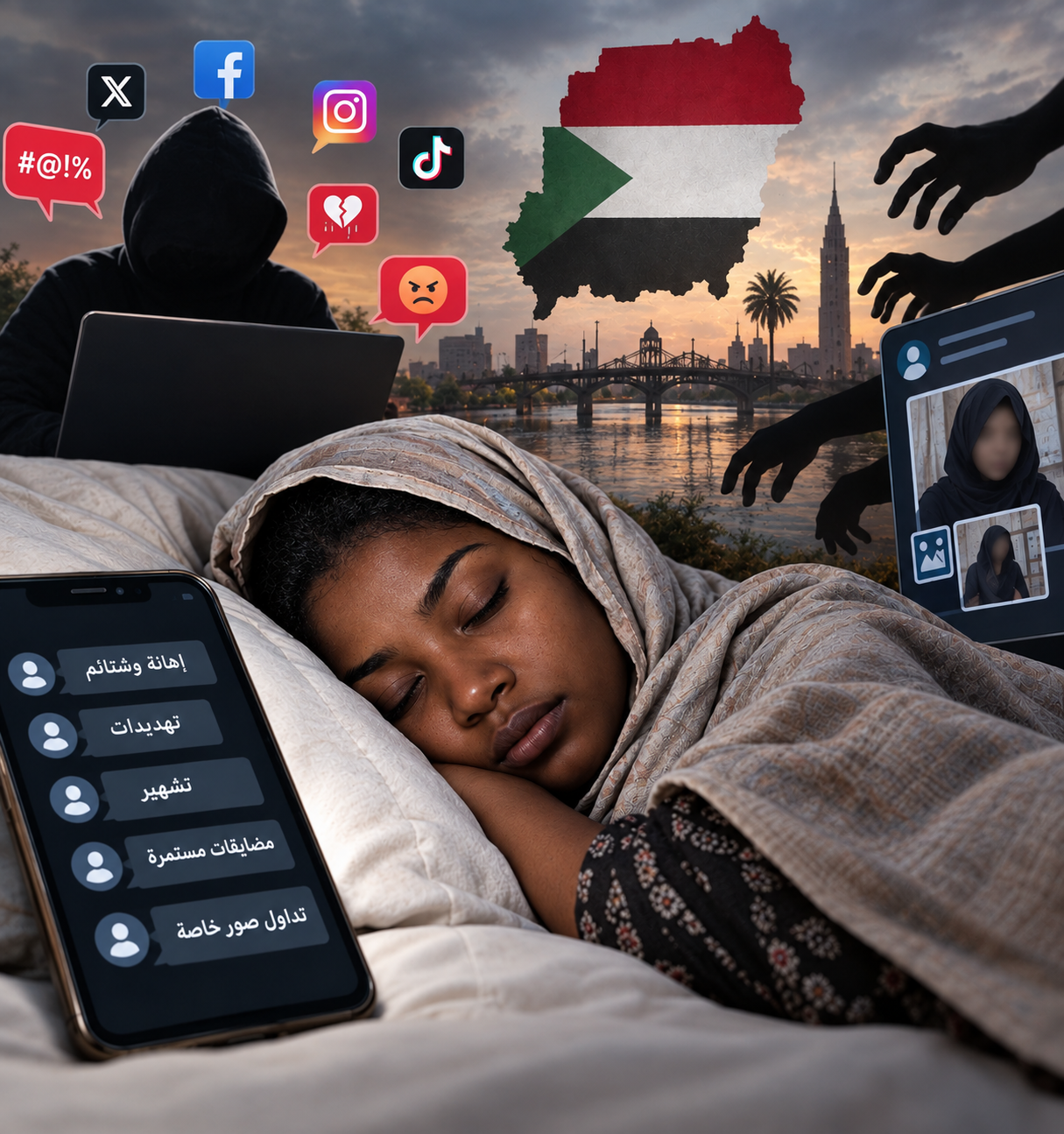
In this investigation, drawing on interviews with nine informed sources, ten female prisoners, and human rights organisations and their reports, we reveal that many of the women accused did not carry weapons. Instead, they were tea and food vendors, teachers, and housewives, or women who remained in areas under RSF control and had no choice but to adapt to the circumstances imposed by the war.
This investigation relies primarily on first-hand information gathered directly from sources, given the scarcity of publicly available material addressing this issue.
Arrests and Trials
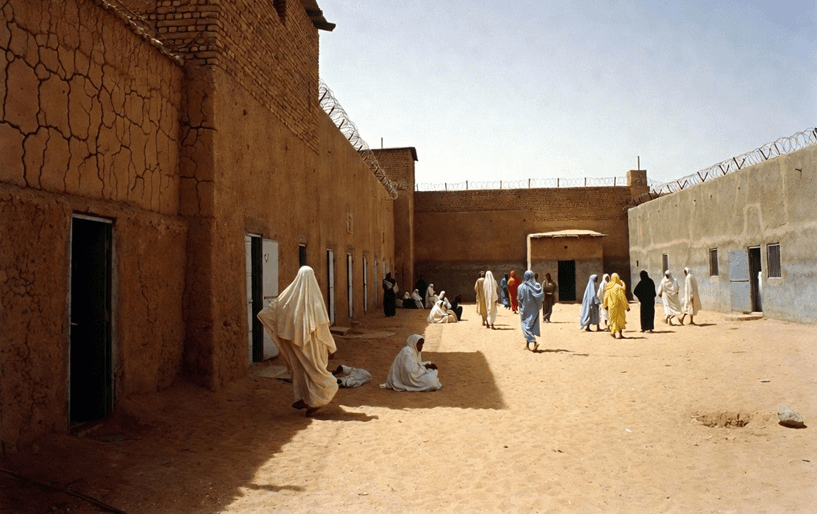
During our visit to Omdurman Women's Prison, known as Dar al-Taibat, in Khartoum, we documented 60 women detained solely on charges of collaborating with the RSF. This represents approximately 10% of the 563 women currently held in the prison, in addition to 83 children living there with their mothers.
This prison (the Correctional Institution) is Sudan's main facility for detaining women. It houses both women awaiting investigation and those serving sentences of varying lengths.
The cases that lead women to prison range from criminal offences, including murder and assault, to drug-related offences, theft, fraud, forgery, and other financial crimes, as well as cases related to armed conflicts and various legal violations.
The prisoners live in shared dormitories and rooms, with conditions varying according to the number of inmates and available resources. Daily life revolves around arrangements for food, drinking water, family visits and healthcare services.
According to three female prisoners, a doctor and prison employees, more than 60 women are currently being held in this prison, facing sentences or trials under Articles 50 and 51.
Among them is Sahar (a pseudonym), 27, a mother of three who has been sentenced to death on charges of collaborating with the RSF. Her eyes filled with tears as she began recounting her painful story.
"I was arrested in November 2023 while leaving Khartoum and heading to Atbara. I spent nine months in the security cell, during which I was subjected to beatings and violence. I lost three of my teeth because of torture. I was also sexually assaulted and pressured into confessing to collaboration under threats," she said.
Sahar, who worked as a translator and supported her family, now feels that her family's livelihood has been taken away because of her imprisonment, despite having committed no crime.
She was tried under Article 50, concerning the undermining of the constitutional order.
"I have come to feel that animals are more merciful than these human beings. Every minute is agony because I am separated from my children," Sahar added.
Despite all the suffering, she continues to hold on to hope in God's mercy.
Meanwhile, Mariam (a pseudonym), a nurse, remained in her neighbourhood after it came under RSF control so that she could continue helping patients and the wounded.
When the army retook Khartoum in February 2024, she was accused of collaborating with the RSF.
"I work in the medical field, and according to the ethics of my profession, it is my duty to treat everyone who comes to the medical centre where I work," Mariam explained.
She pointed out that she was sometimes forced to provide treatment to fighters while under threat of weapons. According to her account, Mariam was kidnapped twice and forced to treat wounded RSF fighters before they left Khartoum, approximately two months earlier.
She spent nine months in temporary detention before being sentenced in October 2024 to ten years in prison. She is currently awaiting a decision on her appeal for clemency.
Legal Provisions
Article 50 of Sudan's Criminal Act of 1991, entitled "Undermining the Constitutional Order", states:
"Anyone who commits an act with the intention, or which is likely, to bring about a change in the constitutional order of the state through unlawful means, or through the use of force, violence or any other illegal method, shall be deemed to have committed the crime of undermining the constitutional order and shall be punished by death, life imprisonment, or a lesser penalty."
Article 51, entitled "Waging War Against the State", states:
"Anyone who participates in, incites, or assists in any way in waging war against the state or any of its regular forces, or provides material or moral support for such actions, shall be deemed to have committed the crime of waging war against the state and shall be punished by death, life imprisonment, or a lesser prison sentence."
These charges carry penalties ranging from death to lengthy prison terms.
Lawyer Abdelbasit Al-Haj explains that these articles were drafted in a way that allows them to be used against civilians and political opponents.
He emphasises that the term "collaborators" does not actually exist in Sudanese law. Rather, the phrase "assisting in any way" has opened the door to broad interpretations that may encompass activities related simply to survival, rather than participation in the war.
He also points out that civilians who remained in areas under RSF control were living under coercion. This should be taken into account under international humanitarian law, which considers anyone present in conflict zones, whether wounded, sick or an ordinary civilian, who is not participating in hostilities, to be protected under the authority of the armed party controlling that area. Such individuals cannot be considered participants in the conflict simply because they are present there, unless they take up arms.
Vague Accusations
Lawyer and human rights defender Osman Al-Basri, who is currently handling the cases of nine women facing these charges, adds that approximately 90% of the women whose cases he has followed work as tea or food vendors.
"Simply remaining in an area under RSF control has become sufficient grounds for suspicion," he says.
According to statements from four lawyers in Khartoum and Omdurman, more than 100 reports have been filed against women accusing them of collaborating with the RSF.
These reports have often been based on personal disputes or general allegations. Legal provisions concerning "undermining the constitutional order" and "waging war against the state" have been used to bring charges carrying penalties of death or long prison sentences, as well as the confiscation of property, against women who simply found themselves responsible for supporting their families and unable to afford even their daily food.
In many cases, the accusations stem from personal rivalries, marital disputes or romantic relationships.
One such case is that of Sumaya (a pseudonym), a 25-year-old woman who found herself accused after a neighbour reported her upon seeing her in a video attending the wedding of an RSF member in eastern Al-Jazira State, south of Khartoum, in August 2024.
As a result, she was sentenced to death after being detained in a village west of Al-Jazira. Following an appeal, the final sentence was reduced to ten years in prison.
"My hope of returning to complete my university studies has disappeared. Even family visits are restricted and monitored," Sumaya says.
Regarding the video, she explains:
"The wedding took place in the open field overlooking our house. I went outside to watch, just like everyone else. I did not even recognise the bride and groom. The entire investigation revolved around the fact that I appeared happy at the wedding, which they interpreted as meaning that I supported the RSF. They accused me of collaboration without even listening to my side of the story."
After obtaining the video that was used as evidence against her, Sumaya says she had not even seen it before and was never provided with any evidence supporting the accusation, other than the direct allegations made by the person who reported her.
She adds:
"Perhaps he did it because I had previously criticised his constant threats against women and girls. Or perhaps he acted because of his influence and the power he possesses. I do not know. All I know is that I attended a wedding, and the result was ten years in prison."
Death by Thirst or by Hanging
While coincidence was what led Sumaya to prison, the search for the basic necessities of life became the accusation against Khadimat Allah (a pseudonym), who lived in the Al-Mazad neighbourhood of Khartoum Bahri, north of the capital.
Khadimat Allah was a trainee lawyer who gathered neighbourhood children to teach them the Quran after schools had closed because of the war.
When the water supply was cut off, she collected water, just like the other residents. Five families, consisting of women and children, relied on the only water tanker available, which was provided by the RSF.
After the army retook the area, she was arrested and sentenced to death. The investigative team obtained a copy of the verdict. The sentence was later reduced to twenty years in prison, while her case remains before the Supreme Court.
One of the neighbourhood residents testified in her favour, saying:
"She used to help people. Suddenly, she became accused of waging war against the state, even though we all collected water from the same source. Sometimes these accusations simply make no sense."
Another case involved a woman over the age of seventy whom we interviewed at Omdurman Women's Prison. She had supported her family by selling food.
When the RSF took control of her neighbourhood, some fighters bought food from her, while others sometimes took it without paying.
She was later arrested and sentenced to twenty years in prison.
During the eight months she spent in pre-trial detention, she said she was exploited and forced to cook and wash clothes while being held in custody.
In this regard, Adila Abu Bakr, head of the Protection Unit at the Strategic Initiative for Women in the Horn of Africa (SIHA Network), which works on women's issues across Africa, confirms that accusations were subsequently directed at any woman who remained in areas under RSF control or was forced to deal with the reality on the ground.
According to monitoring conducted by SIHA in collaboration with lawyers:
"We found that many of the detained women were doctors, nurses, tea vendors and food sellers. The circumstances of war forced them to continue providing services in areas under RSF control," Abu Bakr explains.
She considers the vague definition of "collaboration" to have allowed the term to be used extremely broadly.
"I Don't Know What I Am Accused Of"
With deep sadness, Hind (a pseudonym), a woman in her thirties who is currently imprisoned in Omdurman Women's Prison, recounts her story:
"My husband and I had many disagreements, one of which was that he did not provide us with food. One day, during an especially difficult period of the war, I went out with other women to get flour so that I could prepare food.
Because I had decided to separate from him, he reported me to the security committee, accusing me of collaborating with the RSF and claiming that I used to go out to buy flour from them."
She continues, crying:
"I found myself imprisoned for four months without being formally charged. Then I was shocked to discover that I had been sentenced to twenty years in prison under legal provisions I knew nothing about. I don't even know what this means or why I am here."
Hind is not the only woman who does not know why she was arrested.
According to interviews conducted inside the prison, eight women accused of collaboration said they did not know the reason for their imprisonment. They explained that they were not allowed to ask what crime they had committed and that the prison administration imposed strict surveillance and restrictions on them.
They also said they were not permitted to meet their lawyers or family members.
The journalist who conducted this investigation recounts meeting twenty women accused of collaboration inside the prison. Some had spent two years in detention, others had been sentenced to ten years, and five had received death sentences.
Another detainee, whom we interviewed, was a primary school teacher. She was accused of collaborating with the RSF by her husband, who wanted revenge because she had demanded that he pay child maintenance.
Another woman, who declined to identify her neighbourhood, explained that she had been documenting crimes committed against girls.
She recounts:
"I never expected anyone to think badly of me after I had saved his underage daughter from an almost certain rape. He had been harassing me for a long time. I never hesitated to reject his sexual advances and his repeated inappropriate comments.
Because he held a position of authority, or had acquired power through joining the army as a volunteer mobilised through popular mobilisation, he accused me of collaborating with the RSF.
He did this for no other reason than that I had rejected him. And now I am paying with ten years of my life."
Children Behind Bars
The consequences of these trials have not been limited to women alone.
The investigation documents the presence of dozens of children inside Omdurman Women's Prison, including infants and children who have exceeded the legal age limit for staying with their mothers in prison, due to the absence of alternative accommodation for them.
According to prison regulations, children are allowed to stay with their mothers only until the age of two.
One mother is serving a death sentence while her one-and-a-half-year-old child lives with her inside the prison. She was accused of collaborating simply because she was married to an RSF member.
Another mother, identified as (B.M.), who was interviewed with her infant daughter, said she had spent more than eight months under investigation by what is known as the "Security Cell".
During that time, she was subjected to beatings and humiliation, according to her account.
She adds:
"After I had almost died, I was transferred to the prosecution office. Following six hearings over six months, I was charged with collaborating with the RSF because of phone calls with members of my family.
Because of our tribal affiliation, they consider my relatives to be associated with the RSF. They live in one of the states in Darfur, which is regarded as an RSF stronghold.
After I submitted a plea for clemency, the sentence against me was overturned. However, I was verbally instructed to leave Khartoum because people from my tribe are not welcome here."
The "Security Cell" was established after the outbreak of the war. It comprises members of the army, the General Intelligence Service, military police, military intelligence, criminal investigations and special task forces.
Its responsibility is to investigate crimes related to the war.
One of its members, who requested anonymity, told the investigative team that the unit has the authority to conduct lengthy investigations without formally filing charges, citing the security situation in the country.
He added that the unit's decisions are generally imposed even on the judiciary.
Targeting Women
Since the army regained control of Al-Jazira State and Khartoum, the Strategic Initiative for Women in the Horn of Africa (SIHA Network) has documented the targeting of women on the basis of their ethnic backgrounds, particularly women belonging to Arab tribes.
The organisation says the number of affected women exceeds hundreds.
A report published by the organisation documented more than 840 cases of women being detained between August 2024 and December 2025.
Some of these women were subjected to humiliation and verbal abuse, while certain accusations of collaborating with the RSF were based on their ethnic identity or place of residence.
A source within the Security Cell unofficially confirmed to the investigative team that:
"They do not tolerate any woman or person who even simply returns a greeting from an RSF member. Women were responsible for the militia's continued existence, and they helped provide the enemy with information. They must pay the price."
The source justified the torture, assault and even rape of these women as a form of "punishment" for accepting to deal with the "enemy", as he described it.
Meanwhile, a second deputy prosecutor assigned to cases involving alleged collaborators stated that charges had been brought against more than 1,000 women in a single state.
He added:
"We hope they receive retribution, and we will work towards that."
He did not deny that these accusations were primarily political and were not based on the law. He went on to say:
"Even if the report is motivated by revenge, that is still suspicion. And in our view, suspicion of collaboration is certainty. The punishments are always severe so that they serve as a warning to anyone who might consider betraying the country."