
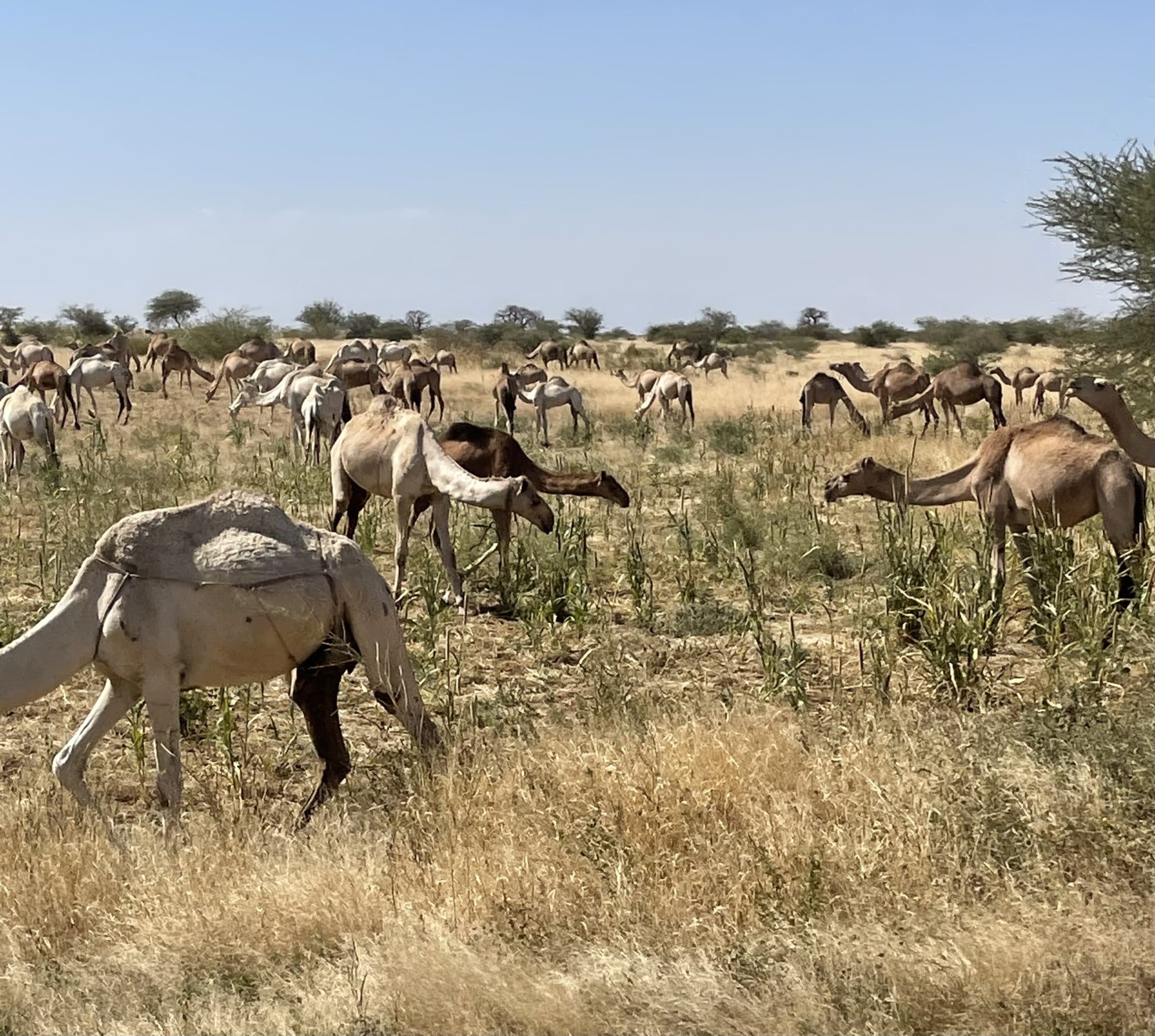
Sudan: Livestock Under Fire
Sudanese Media Forum
By Naima Al-Haj
El Obeid, 10 March 2026 (Jubrakah News) – Sudan’s livestock sector has long been one of the main pillars of the country’s economy, contributing approximately one-third of gross domestic product (GDP), supplying domestic and international markets, and providing a primary source of income for around 40% of the population.
Since the outbreak of war in April 2023 and the escalation of military operations in Darfur and Kordofan, the sector has faced unprecedented shocks affecting production, animal health, supply chains and exports. As a result, the future of one of Sudan’s most important productive sectors is now seriously threatened.
Before the war, pastoralists moved freely across extensive grazing lands, from areas such as Um Badr and Hamrat El Sheikh in the north to Bahr al-Arab and the Nuba Mountains in the south. These seasonal and year-round movements were an established feature of pastoral life.
However, as the war intensified, available grazing areas became increasingly restricted, forcing livestock herds to concentrate within smaller geographical areas. This created serious water shortages, as the dawanki water wells could no longer supply the required quantities because of fuel shortages. The cost of watering livestock increased, while the lack of markets for selling male sheep made it difficult for herders to meet their expenses.
Direct military confrontations in the areas stretching between Al-Khuwai and Al-Nuhud also resulted in the deaths of large numbers of livestock. Animals were killed by bullets and artillery shell explosions, while fires destroyed grazing lands.
Another category of livestock herds is involved in commercial trade, with destinations including markets across Darfur and Kordofan. After being assembled, the herds are driven eastwards to quarantine facilities at the Al-Khuwai, Al-Rahad and Bara livestock centres, where they undergo preparations for export. They are subsequently transported to ports on the Red Sea for shipment overseas.
According to an analytical report published by the Atar Network, drawing on the Food and Agriculture Organization (FAO) Crop and Food Supply Assessment Mission and international research papers, Sudan's livestock sector previously comprised approximately 111.8 million animals, including sheep, goats, cattle and camels.
The sector supplied around 90% of the domestic market's meat requirements and was also a major source of foreign currency through organised exports, particularly sheep, camels and cattle, to markets such as Jeddah and Cairo.
The Impact of War on Livestock Trade
Hussein Osman, a livestock trader in Kordofan since 2008, says the war has completely disrupted the export system, which previously operated through an organised series of logistical stages. These included collecting livestock at local markets, veterinary inspections, transportation to export ports and shipment through specialised shipping companies.
He explained that road closures, rising costs and security risks had brought buying and selling activities to a standstill and frozen exports. New fees, together with transportation and insurance difficulties, had resulted in substantial losses for pastoralists and traders.
As the conflict expanded and different areas along livestock migration routes came under the control of either the Rapid Support Forces (RSF) or the Sudanese Armed Forces (SAF), the sector encountered increasingly severe difficulties.
Road closures prevented livestock exports from being transported, while herds were subjected to widespread looting, robbery and theft, which became increasingly systematic. These developments further increased operating costs.
Against this backdrop, armed individuals known locally as mutawwifin emerged. They are usually residents of the areas through which livestock passes and are hired to escort and protect herds along their routes until they reach their destinations. In return, livestock owners pay an agreed fee.
Despite these arrangements, herds have not been spared from looting and robbery, particularly because of the so-called checkpoints established along livestock routes.
These checkpoints are controlled by armed tribal groups that impose financial charges. When herds enter areas under RSF control, they may be detained and prevented from proceeding until substantial payments are made.
Yousef Naway Al-Badri, Director of the Livestock Sector in South Kordofan, noted that military operations had led to a reduction in grazing areas in the eastern parts of the state. This has made Al-Qouz locality the main centre for livestock production, currently holding approximately 12 million animals.
He explained that veterinary coverage faces considerable challenges and reaches no more than 30% of the total livestock population, even following interventions by some organisations supporting the sector.
He added that inadequate veterinary coverage places an additional burden on the local government, particularly given disruptions to roads and supply chains. Nevertheless, traditional livestock migration routes (marahil) continue to function reasonably well, while the search for alternative routes has helped pastoralists protect their animals.
At a later stage of the conflict, the RSF leadership issued a decision prohibiting the movement of agricultural and livestock exports from Kordofan and Darfur into areas controlled by the army.
Faced with these restrictions, livestock traders encountered significant difficulties and were forced to seek alternative routes. Many turned northwards towards Al-Dabba, travelling through Al-Mazroub. These areas have limited water resources, increasing costs further, in addition to already high transportation and shipping expenses.
Looting, Smuggling and the Decline of Grazing Lands
A livestock expert told Jubrakah News that military operations had forced pastoralists to avoid established routes, reducing their ability to make use of traditional grazing areas.
The expert added that both regions had witnessed widespread livestock looting, as well as increased animal deaths resulting from restricted access to grazing lands and water sources.
Livestock-smuggling networks have also become increasingly active, moving animals into neighbouring countries and taking advantage of demand and resource shortages in those markets.
Concerns Over Unregulated Activities
In North Darfur, a young man from El Fasher reported seeing large numbers of livestock along the road between Tawila and Qarni, a journey that takes approximately three hours by car.
The sighting reflects the substantial concentration of livestock in the area. According to the situation on the ground, these locations currently fall within territories controlled by the RSF.
There are concerns that some transportation and livestock sales activities may be taking place outside official regulatory frameworks governing veterinary quarantine and animal health, amid weak monitoring and oversight.
Observers believe that any exports conducted outside approved protocols could potentially pass through desert routes towards neighbouring countries or through unofficial border crossings beyond regulatory supervision. However, these reports have not been independently verified.
The war in Darfur and Kordofan has affected far more than security and political stability. Its consequences have extended deep into Sudan's agricultural and environmental economy.
The livestock sector has come under severe pressure, including the suspension of exports, declining grazing resources, increased animal mortality, smuggling and the expansion of unregulated activities.
With large herds concentrated in specific areas and veterinary coverage severely restricted, the sector's ability to recover and contribute to future food security will depend on improvements in the security situation, the reopening of roads, and the stabilisation of animal health and export policies.
Sudan's livestock sector remains a fundamental driver of the national economy. However, it is now facing unprecedented challenges that require urgent and coordinated solutions involving the government, local and international organisations, and pastoral communities.
The Sudanese Media Forum and its member organisations are publishing this report, prepared by Jubrakah News, to highlight the severe damage inflicted by the war between the Sudanese Armed Forces and the Rapid Support Forces on Sudan's livestock sector, particularly in Kordofan and Darfur, where military operations have been widespread.
Military operations have forced pastoralists to abandon established grazing routes. They have also faced widespread livestock looting and rising animal mortality as access to grazing lands and water sources has been disrupted.
Meanwhile, livestock-smuggling networks have expanded amid the conflict, taking advantage of demand and resource shortages in neighbouring countries.
Related news
 Reports
How Did Sudanese Civilian Women Become Accused of Collaborating with the Rapid Support Forces (RSF)?
 Reports
When politics, identity, and gender intersect… Sudanese women in the crosshairs of digital violence!
 Reports
El Fasher: One Year After the Catastrophe Survivors Carry Memories of Death into Exile
Videotest video